 This is how I came out at work:
This is the first part of how I came out at work. I work in a department that is somewhat isolated from the rest of the people in this building. This post covers how I came out to my department. Another blog will detail how I came out to the rest of the building and to institution where I work.
First things first – a disclaimer: so far I consider myself very fortunate in that everyone has accepted my transsexuality and transition remarkably well with full support. They are correcting each other and defending me. Even the persons that I thought would have the most difficulty have taken me under their protective wings so to speak. I would definitely ‘not’ consider this a normal or usual situation – your mileage ‘will’ vary.
Another disclaimer: I am involved in outreach programs for the public and run our programs in virtual worlds (Second Life, Metropolis, InWorldz, etc.). My avatar in all those worlds is female and I use my Sifan name. Everyone at work knows this. This plus my ‘normal’ disposition probably allowed everyone to ‘connect-the-dots’ long before I came out. At the very least, everyone could accept my situation right away.
For now, I have only come out to the department that I work in. I chose to do this now, before hormone treatment, hair removal, voice lessons, etc. so that this would be a gradual change for them. I work for the University, with their attendant rules regarding fairness inclusive of transgender issues. I will still be working here as I transition and beyond. More than likely so will the rest of the people in this department.
Up until hormonal changes become obvious, I intend to make small changes in my appearance every couple of weeks or so, both as a reminder of what is coming but also to acclimate everyone. I started wearing bracelets, then I started carrying an over the shoulder bag and now changed that to a purse. I will get my ears pierced, then change from studs to rings. My hair is starting to grow out (what a mess) but soon I’ll have my first styling. I already am growing my finger nails and am keeping them about medium and buffed (I do not think I will wear polish). I am also signing anything non-official as ‘Sifan’ (email, notes, etc.).
I prepared a one page letter (attached below) where I introduce and put my transition in perspective.
Coming out to people
In most cases I came out individually, one on one. This gave each person the opportunity to ask questions that might have been embarrassing if someone else where present. It also allowed me to deal with each personality separately and tailor each session as well as respond and go with their individual ‘flow’.
The best way to start, is to come out to someone you believe is an ally. There is a woman at work that I am close to. I would describe our relationship and conversations as between girl friends. We have both been very supportive of each other. She was ‘excited’ when I told her! She stated: “don’t be surprised if some of us knew this before you did”. We now consider ourselves sisters. She has been helping me in so many ways and is someone I can go to for ‘feminine’ type questions and advice. The purse I bought, the laser hair removal clinic, where I bought my first wig – are all influenced directly by her.
The person I considered the toughest also went very well, although the circumstances of that day(s) were anything but ideal. It turned out well, but perhaps there is a lesson to be learned …. It’s important to try to choose the right environment and conditions – but sometimes things just happen and you have to go with the flow. We were about to have a departmental meeting and he came in early. He was the last person I was coming out to and asked him if he could stay after the meeting so that we could talk. Well, of course this raised a number of concerns with him (did he do something wrong? was I ok? etc.). I didn’t want to cause addition stress, but suddenly I was in a situation where not telling him would cause greater concern. Unfortunately, we only had 10 minutes of conversation before others started to arrive. The lesson here is two-fold: don’t say anything until the time is right and do not feel pressured into saying anything.
A few days later I was up where he worked and we were able to have a long conversation. His up-bringing was very conservative as well as his current situation. He did however, have exposure to a transsexual teenager in his neighborhood. By the way, over 70% of the people I have come out to, know of a transsexual – some within their families, others as neighbors or friends. I’m not sure if this is a sign of the times or perhaps where I live.
Later that day, I had to diagnose some equipment. He came up, moved heavy things around for me, setup a table and generally was like a big brother. I think being open and honest, willing to listen and to gently explain your situation makes all the difference. Of course he had the disposition to listen and learn as well.
Today, most everyone corrects the other if they use the wrong pronoun or my old name. They have told me that if anyone outside the department says anything they will give them a piece of their mind! Everyone is inclusive, supportive and protective of their Si! I am so grateful and amazed.
HR has been informed and later will hold sensitivity training at our site (in fact I was asked to prepare a couple of slide for them). Before then I will continue to come out to others outside of my department that I work with or am friends with.
Having ‘The-Talk’
Well, there is no such thing as a standard ‘The-Talk’! Every person is different; everyone is going to respond differently according to their own life’s story. You first have to spend time assessing the person you are about to come out to – prepare for what they might bring up. And always be ready for about turns and surprises!
There are some ‘standard’ concepts that I either bring up each time or have in my ‘satchel’ in case I need them. I try to cover the items in the letter (but I do not have the letter out, nor have I given it to them yet). You do not want to seem as if you are reading a prepared statement! This totally has to go with the flow and exchange between the two of you.
In addition to items covered in the letter, I will explain the ‘scales’ and their independence: natal sex, gender, sexual orientation. For simplicity I keep it to only these three. Most people have assumptions that these are connected in some way so upfront I attempt to explain each scale has nothing to do with the others. I usually give examples to show that none of these scales are ‘polar’. For example, XXY and XYY (intersexed) would be in the middle somewhere on the natal sex scale Androgynous, transgender, transsexual and neutrois somewhere in-between on the gender scale. And heterosexual, bisexual, gay and lesbian as examples of the orientation scale. Once again I point out that these scales are independent: I am a natal male with a female gender and a sexual orientation to females, so I consider myself a lesbian (let them wrap their heads around that for a while)! But again – what I say and when I say it depends on who I’m talking to and the flow of the conversation.
I also talk about my youth and some early memories of how I was different and coped with my situation. I talk a bit about this being pre-natal, having to do with hormones and timing of fetal development somewhere about the 6th week in utero, with the mind developing different from the body (gender vs natal sex). I might also introduce the concept of a body map. The same map that explains how an amputee can still feel their severed limb. That in this body map is also the minds concept of gender and who we are and how this explains the disphoria of having extra body parts that are not ‘supposed’ to be there or the uncomfortableness of missing body parts that ‘are’ supposed to be there (including – like the amputee – being able to feel their presence)! I usually point out examples of people who denied who they were and how that can be excruciating and usually results in this coming back with a vengeance.
I also talk about my partner and how we are doing – being honest and hinting at the issues as well as the progress – being realistic helps them see that this is not a fad or a wish or a choice, but rather coming to terms with and accepting who you truly are.
I finish with realistic expectations of what they could expect as time and the transition progresses, telling them my hopes and wishes for their acceptance, patience and indulgence.
A main point here – this is not a lecture, nor a one-way conversation. What is said and when it is said is strictly dependent on the ‘flow’ of the conversation and the individual involved. This is a conversation ….
Suggestions on creating a letter
There are so many ways to create a letter explaining your transition. For me the benefit was to cover all the issues and details in case I missed anything in our one to one conversation. Note, this letter ‘always’ was given out personally, face to face. I did not email or mail this off to anyone without having a conversation first. It was not meant to ‘stand-a-lone’ – but only to cover all the bases plus leave something for the other person that they can refer back to and refresh their memory of what just happened. I’m sure you have been in a strange situation, where even though everything was explained to you – afterwards you are trying to put all the pieces together to make sense of what happened. My intention was for this letter to bridge that type of situation.
It needs to be personable – you need to have ‘you’, your heart, show through. They need to see what they know as you, to be present in your letter. This ties the strange (to them) and unusual content to the real you and makes it easier for them to see and connect with. It’s good to start out with something about yourself before you actually lay it on the line … Talk about how long this has taken and the struggles you have had plus the professional help you are receiving.
The people around me are all in academia so it was important for me to talk about current medical and scientific perspectives. I confronted some common misconceptions by stating this was not a choice, this is something we are born with attempt to cope with all our lives. Show that you have done your homework and put in the effort; talk about how you came to this conclusion.
Try to connect this to something they already know about you. In my case, I’m in charge of our outreach programs in virtual worlds. I have a female avatar that they all know about and have seen. They also know my management style: I’m nurturing, listen intently and negotiate.
Finally, state your expectations of your transition and what you hope from them. Finish by offering to talk with them and offer references to material.
Coming out letter:
Aloha !
This is a difficult (and scary) thing for me to share. I want to take a moment to explain to you some of the changes you may have already noticed in me. Because these changes will now start to accelerate, I think this is a good time to let you know the rest of the story. This is a huge change in my life. You probably already could guess or perhaps already knew, so here goes:
It has taken a long time – a life time – to get here, to a place where I understand who I am and now to be and live as myself. It’s the end of a quest and the start of a journey.
Today I feel as if I’m standing on a threshold, one that will take a lot of courage, forethought and aplomb to cross. This is not a threshold as in a door but rather a slender gendarme blocking the route on a sheer arête with thousand foot precipices on both side. It requires gentle, well thought out, yet decisive moves to negotiate and climb around it.
I am a transsexual woman; my gender is female and my birth sex is male (this is the official medical definition and its in my medical record).
This is not a choice, nor is it a lifestyle or even a preference. It took many years, with professional help, to find who I am and to finally merge all of my life’s descriptiveness, talents, sensitivities and general outlook on life into a deep understanding of self. As that phase progressed, it was my maleness that started to fall away, like layers of an onion. Rather than becoming a woman, I realized I am a woman.
As Sifan in a virtual online world (an avatar), I was able to see and experience who I am. Virtual worlds allowed me to be immersed, just like a paraplegic is able to dance, surf, climb and enjoy a life they could only imagine. My body does not allow me to express myself, to emote, to show my body language or to feel the way I ‘should’. An over used metaphor is to imagine that you wake up tomorrow morning with the opposite body sex than you are now – however, ‘you’ (your being) remains the same. ‘You’ have to put on an act all your life to be able to fit into society and its expectations. I know what I am and I want that to come through.
Medical science now recognizes transgender/transsexualism as a pre-natal condition – occurring around the sixth week in-utero. In other words this is one of many expressions of being human – has been forever. In ancient societies transgender/transsexuals were the shamans and priestess: we were seen as being able to understand and bridge genders and society – magic and power. The 2012 DSM (medical standards) removed ‘disorder’ from transgender/transsexualism. The problem is not who we are but instead it has to do with how we handle and respond to society (and critically, how society responds to us) when visually we are a particular sex but internally we are the opposite gender.
Transition is a slow process. Getting to this point in my life was even slower. It’s a one way street. It’s very serious, its critical, painful and part of the journey is not pretty. I have done a lot of research, talked to doctors, psychologists and professionals plus other transsexuals that are both pre-op and post-op. It is a tricky gendarme and sheer arête indeed. I now have a realistic visualization of myself post transition. I also realistically visualize each step and maneuver along the way – some are definitely not pretty. “I” do not change – what changes is my body, my effectiveness in communicating and expressing myself and my comfort (comfort is a difficult word here – it is so much more) in being the real me. This will bring me congruence and consistency: embodiment. If you have had the experience of interacting with me as Sifan (virtual or real world) – then you already know what this difference is.
As part of this transition, I will be officially changing my name to Sifan or Si for short.
I wish for your patience, indulgence and understanding.
It is hard to remember all the things I would like to tell you and to be sure I covered everything. That is why I wrote this short note. I hope you find this helpful and informative. As you can imagine, this is very difficult to write and send. If you are curious and would like to know more, please, I would love to discuss this. I have a lot of resources I can point you to as well as articles I have written.
With kindness and Aloha,
Sifan
 In coming out, especially to family, I inevitably get the question: “what makes you think you are a woman” and “give me examples through-out your life” followed by “well, men are like that/do that too”.
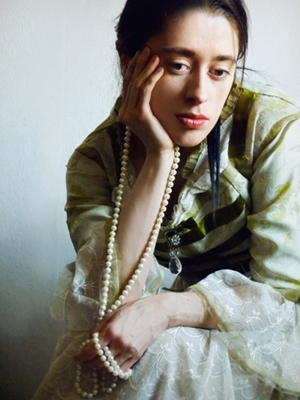


 Sifan's Journey